


What is Frustration Free Packaging and Why Brands Are Adopting It
Discover how premium packaging transforms your brand's perception and drives customer loyalty in today's competitive market.
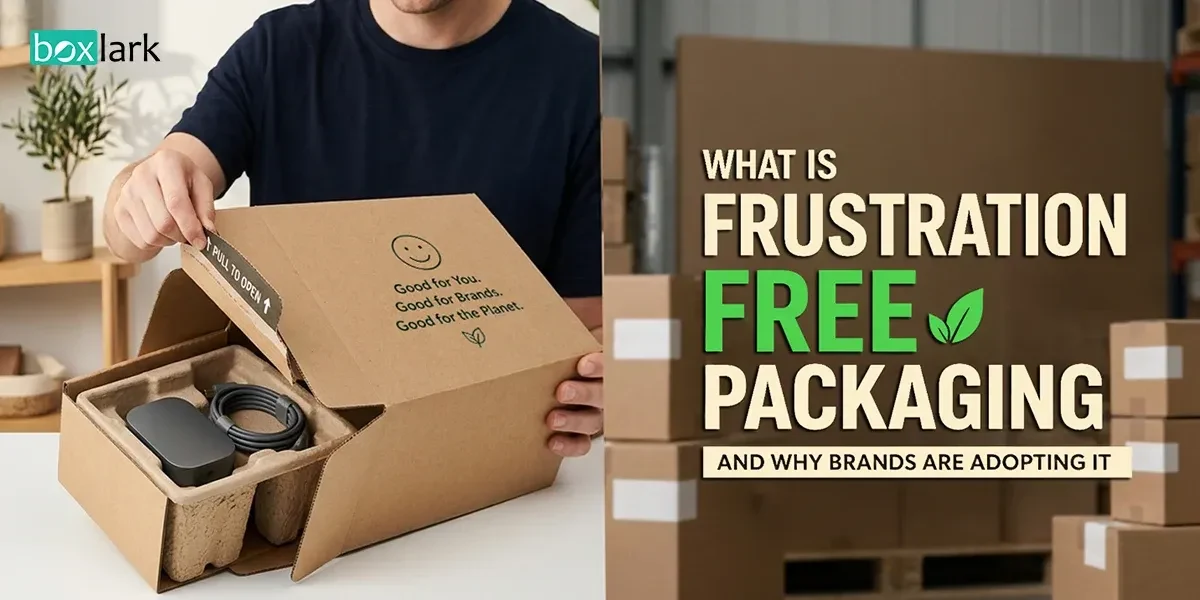
- Understanding the Concept and Innovation Behind Frustration Free Packaging
- The Role of Protective and Easy-to-Open Packaging Solutions - What You Need to Know
- Explore Insights into Frustration-Free Product Packaging Features
- Difference Between Frustration Free Packaging and Traditional Packaging
- The Impact of Hassle-Free Packaging on Customer Experience and Satisfaction
- Frustration Free Packaging: A Move Toward Simplicity and Sustainability
- Where to Order Frustration-Free Packaging?
Since the world is changing, the demand for an easy life and comfort in all aspects is increasing day by day. Starting from the ordering of food by tapping on it to watching movies directly online, everything requires comfort. The trend of the world applies perfectly to the online buying trend as well. Every time the customers order something, their expectations rise automatically, and several questions come to their minds. They wonder whether the product will be the same as shown in the pictures. Or other questions like, will it arrive in the same condition without any dents or scratches? Will the packaging be good enough to protect what’s inside? And perhaps most importantly, will they be able to open it without a struggle? Therefore, the concept of frustration free packaging came into the packaging industry.
This type of packaging answers all the questions on the customer's mind. It is an approach designed to make the receiving and opening process as smooth as possible. It eliminates the annoyance of hard plastic casings, excessive tape, and layers upon layers of unnecessary boxes. Instead, it focuses on simplicity, recyclability, and user experience.
In this blog, we will learn about the depths of this packaging revolution, why it matters, and how it is changing the relationship between brands and buyers. Let’s read further.
Understanding the Concept and Innovation Behind Frustration Free Packaging
To truly appreciate the value of this concept, we first need to define what it actually is. Frustration-free packaging is a method of packaging goods that is ready to open right out of the shipping box. It does not require additional tools like box cutters, scissors, or heavy-duty shears to access the product.
The term was popularized largely due to initiatives by major e-commerce giants who noticed that customers were getting upset with "wrap rage". This is the feeling of intense frustration one feels when trying to tear open a seemingly indestructible plastic blister pack. If you are unfamiliar with blister packaging, this guide explains it well: What Is Blister Packaging? Types, Materials, and Advantages.
In frustration-free packaging, the product is shipped in its original retail box, which is designed to be sturdy enough to withstand shipping and handling without needing an outer shipping box or excessive filler materials like bubble wrap and foam peanuts.
"Great products deserve a grand entrance, not a struggle."
The core idea is to create a seamless transition from the delivery truck to the customer's hands. It takes the focus away from fancy display packaging meant for store shelves and redirects it toward secure, easy-to-open packaging.
The Role of Protective and Easy-to-Open Packaging Solutions - What You Need to Know
Why did the industry shift toward this model? The purpose goes beyond just making things easier to open. It addresses several critical issues that affect the supply chain, the environment, and the consumer.
Making Unboxing Faster and Easier
The most immediate purpose is to save the customer from anger and potential injury. Traditional packaging often uses sharp plastic edges and wire ties. Trying to cut through these can lead to cuts on fingers or even damaged products if the knife slips. Frustration free packaging removes these hazards, making the unboxing process safe and quick.
Reducing Environmental Waste
A massive amount of waste is generated by traditional e-commerce shipping. In traditional shipping, it might be in a plastic blister pack, placed inside a colorful cardboard box, wrapped in bubble wrap, and then put inside a larger corrugated box.
The product ships in a single, easy-to-recycle box. This significantly reduces the amount of cardboard and plastic ending up in landfills. Brands are increasingly aware that their customers care about the environment, and reducing waste is a major step toward sustainability.
Optimizing Logistics
From a business standpoint, the purpose is also about efficiency. Smaller, lighter packages mean more products can fit into a delivery truck or shipping container. This lowers shipping costs for the brand. It creates a leaner supply chain where space is utilized effectively rather than being wasted on air and extra packaging materials.
Explore Insights into Frustration-Free Product Packaging Features
How do you identify this type of packaging? It isn't just about putting a label on a box. There are specific design elements and features that define it. Some are written below:
- Easy-Open Design: The most obvious feature is the ability to open the box without tools. This often involves features like pull-tabs, perforated tear strips, or simple folding tucks that come apart easily.
- Recyclable Materials: These packages are almost exclusively made from materials that are easy to recycle, such as cardboard and paper. They avoid the use of plastic laminates, Styrofoam, or PVC blisters that are difficult for standard recycling centers to process.
- Minimalist Aesthetics: While retail packaging is often bright and flashy to catch your eye on a shelf, frustration free packaging is usually more understated. The focus is on clear labeling and instructions rather than flashy graphics.
- Right-Sizing: The packaging fits the product snugly. You won't find a tiny item rattling around in a huge box. This right-sizing ensures the product is secure during transit without the need for excessive void fill.
- Tamper-Evident Seals: Despite being easy to open, security is not compromised. These packages often use security tape or seals that show if the box has been opened before, giving the customer peace of mind about the product's condition.
Difference Between Frustration Free Packaging and Traditional Packaging
To really understand the shift, it is helpful to compare the two side by side. While normal packaging has its place in retail environments, it often falls short in the direct-to-consumer model.
Features | Traditional Packaging | Frustration Free Packaging |
Primary Goal | Attract attention on a store shelf; prevent theft in stores. | Reach the product to the customer safely and easily; eco-friendly. |
Opening Difficulty | Often high, requires tools like knives or scissors. | Low, designed to be opened by hand in seconds. |
Materials Used | Mixed materials (plastic blisters, wire ties, Styrofoam, glue). | Single stream materials (mostly cardboard and paper). |
Layers | Multiple layers, product in an inner box, wrapped in plastic, inside a shipping box. | Minimal layers, often ships in its own box without an outer shipper |
Recyclability | Often difficult to recycle due to mixed materials. | Highly recyclable and curbside friendly. |
Space Efficiency | Bulky, contains a lot of space (air) and filler. | Compact, designed to fit the product dimensions exactly. |
Customer Risk | High risk of cuts or "wrap rage". | Low risk, safe for all ages. |
The Impact of Hassle-Free Packaging on Customer Experience and Satisfaction
When a customer buys something online, the package arriving at their door is the only part of the brand they can actually touch. There is no store to visit and no salesperson to meet; the box acts as the company's representative. If that package is difficult to open or looks messy, it creates a bad first impression immediately. Frustration-free box packaging changes this by ensuring the experience of receiving the product is just as good as the product itself.
Ease in User Experience
People naturally lean toward things that are easy. When a customer receives a product, they are excited. However, if that excitement turns into a battle with plastic and tape, the frustration is subconsciously directed at the brand. Frustration-less packaging removes this barrier. By allowing the customer to access their purchase within seconds, the brand validates the customer's excitement. This smooth transition creates a positive "reward" in the customer's mind, linking the brand to feelings of relief rather than stress.
Simple Packaging That Builds Trust
Minimal packaging sends a strong message that the brand is confident. Over-packaging can make customers wonder if the product is actually good or if the brand is trying to hide something. No frustration presents the product honestly and compactly. It shows the product clearly without using extra materials to make it look bigger than it is. This honesty helps customers trust the brand and feel good about their decision.
The Joy of Easy Unboxing
In the age of social media, the unboxing experience has become a powerful marketing tool. People love to share videos and pictures of what they bought. A frustration-free package is usually clean and aesthetically pleasing. It opens gracefully. Customers are more likely to share a positive experience where the packaging looks elegant and eco-friendly rather than a video of them struggling with a knife and plastic wrap.
Saving Time and Reducing Waste
Modern customers are busy and do not want a mess. Traditional packaging often leaves behind piles of cardboard, plastic, and foam that need to be cleaned up. Convenient packaging respects the customer's home. It uses less material, so there is very little trash to throw away. By making the cleanup simple, brands show they care about the customer's time and their living space.
Stopping Buyer’s Regret
Difficult packaging can make a customer regret buying something. If they struggle to open the box or accidentally damage the product while trying to cut through plastic, they feel like they made a mistake. Frustration-free packaging stops this from happening. The easy opening process reassures the customer that they made a smart choice, keeping them happy long after the delivery is over.
Frustration Free Packaging: A Move Toward Simplicity and Sustainability
The move toward stress-free packaging is more than just a short-term trend; it is a major change in how businesses operate. Everyone is shifting from the idea that "more is better" to realizing that "less is more." Companies are learning that adding layers of plastic and complex designs does not add value for the customer; it actually takes away from the good experience.
As technology improves, everyone can expect to see even more new ideas. They might see packaging made from natural materials that are strong yet biodegradable. They can see smart labels that clearly show how to recycle every part of the package.
But the main goal will always stay the same: respecting the customer and respecting the Earth.
Where to Order Frustration-Free Packaging?
In online shopping, small details matter. Customers have many choices and no patience for bad experiences. The real test happens when they open the box. Frustration free packaging stops the frustration of opening boxes and saves on shipping. It is a win for everyone.
“Customers enjoy a hassle-free experience, brands save money, and the world sees less waste.”
If you are thinking about making this change, choosing the right partner is very important. You need a team that understands how to balance protection, style, and sustainability. BoxLark provides custom packaging solutions for today's market. Whether you need fully recyclable boxes or custom-printed frustration-free packaging that impresses your customers, BoxLark has the skills to make it happen. If you want to improve your packaging strategy, reach out to sales@boxlark.com.