


Common Packaging Mistakes Businesses Should Avoid (And How to Avoid Them)
Discover how premium packaging transforms your brand's perception and drives customer loyalty in today's competitive market.
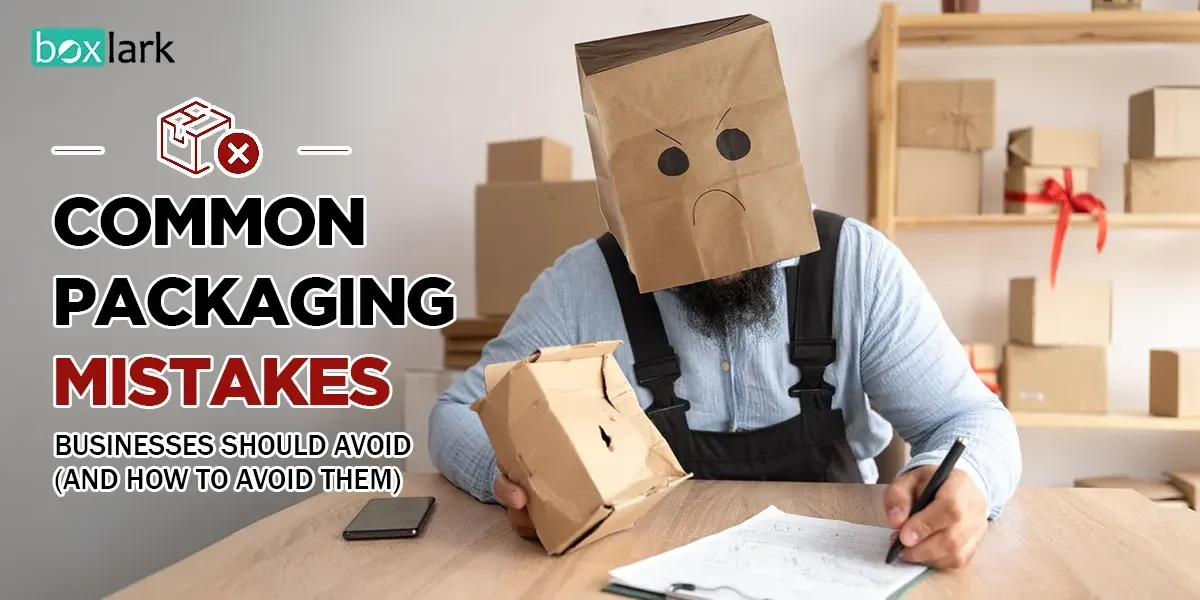
Ever wondered why two businesses selling almost the same products receive completely different customer reviews, yet one gets excellent reviews, whereas the other faces criticism? You would be surprised to know that this happens not always due to the nature of the product, but rather it's the packaging of the product.
Some small packaging mistakes lead to more significant problems. This could be choosing a box that is too big, using the wrong packaging materials, or a lack of fillers to keep the product in place. These mistakes can ultimately damage the item and cause customer dissatisfaction and unnecessary extra expenses.
But wait, there is some good news for you.
The majority of these mistakes can easily be prevented if you are aware of the pitfalls.
In this detailed guide, we will go through the most prevalent packaging mistakes companies make and how you can prevent them from happening.
No further ado; let us get straight into the thick of it!
What Are the Most Common Packaging Mistakes Businesses Make?
All companies expect their products to get to the consumers in good condition. But packaging is an area where even slight negligence could bring about costly troubles. This is the exact reason why the phrase “Packaging Matters” has become more relevant than ever.
Regardless of the size of the business you own, your outer covering should be flawless to establish credibility and professionalism.
For that purpose, you should know what businesses often do wrong, as these mistakes can affect product performance during delivery. Below is a list of the most typical packaging mistakes businesses make, along with tips on how to prevent them.
Using Weak or Low-Quality Packaging Materials
Utilizing poor-quality or weak materials for the product packaging can ruin the business reputation. Although this may seem like a smart decision to reduce costs, it often results in problems. These materials do not withstand stacking pressure, rough handling, and transportation over large distances, thus resulting in crushed packages, broken items, and unhappy customers receiving damaged orders.
Example:
If a small electronic item is packaged in a thin kraft box and larger products are stacked on top of it during transportation, the package may become deformed, and the product inside may be damaged before it reaches the end consumer.
How to Avoid It:
- Use corrugated cardboard instead of thin packaging sheets
- Match packaging strength with product weight and fragility
- Avoid selecting materials based only on the lowest cost
- Test durability under pressure and real shipping conditions
In case you are uncertain about the type of materials, go through our comprehensive blog “10 Different Types of Packaging Materials You Should Know.”
How Packaging Dimensions Affect Product Safety: Common Sizing Mistakes
One of the most frequent errors committed by firms is using an improper box size. It may seem like a minor issue at the time of packaging, but it will have a bad impact on the safety of the product during shipment. When the box is bigger than needed, there is too much room inside, causing the product to move and leading to damage.
However, when the box is too small, the product gets destroyed due to the pressure.
Example:
If a smaller cosmetic jar is packed into the larger cardboard box without having a suitable packing arrangement. Then, the jar can keep moving back and forth during transportation, and even small shocks lead to cracks on the cover or breakage of the jar.
How to Fix this Issue:
- Measure product dimensions properly
- Choose a box that fits the product closely without squeezing it
- Use fillers only when there is a slight extra space
- Always do a quick fit test before final packaging decisions
In case you find it challenging to grasp the right dimensions of the packaging, then you can read our in-depth blog “Custom Packaging Dimensions: Length, Width & Height Explained” for a clearer breakdown.
Poor Packaging Design and Weak Branding
A typical problem with packaging by many companies is neglecting the marketing aspect. Many only consider the protective aspect of the outer covering and fail to remember that it is also a representation of visual identity.
Poor design makes the brand image poor, too. A high-quality product will appear inferior if its packaging fails to represent the brand because it is usually the first thing a customer sees.
Example:
Suppose a high-end skincare product comes in an ordinary brown custom skincare box that lacks a logo, brand identity, or weak designs. Despite being a high-quality product, the consumer considers it to be an inferior product due to poor branding or ordinary design on its packaging.
Ways to Avoid this Mistake:
- Keep brand colors, logo, and typography consistent
- Use a simple and clean design for easy recognition
- Match the outer covering style with the product and brand positioning
“Good Packaging Does Not Just Protect the Product; It Also Tells the Customer Who You Are.”
Skipping Cushioning for Fragile Products: Why Is Protection Inside the Box So Important?
Even though the external box may be durable, it is the internal materials that do the actual work of protecting the delicate goods. Without cushioning, the goods can easily jolt, vibrate, and hit the walls inside. It’s just this simple vibration that can lead to damage in the form of cracks or breakages.
Example:
If someone has placed a glass bottle inside a custom bottle box without bubble wrap or foam padding. What will be the results? The bottle keeps hitting the sides and eventually breaks before reaching the customer.
How to Avoid This Issue:
- Use bubble wrap, foam sheets, or kraft paper around fragile items
- Fill all empty spaces so the product stays fixed in place
- Add cushioning on the bottom, sides, and top for full protection
If the outer covering is protection, cushioning is the layer that actually absorbs the impact.
Overcomplicating the Unboxing Experience
To create a premium appearance for the product or an additional sense of security, manufacturers often pack too much, and as a result, the consumer gets frustrated rather than impressed. The process of unpacking the goods must be pleasant and easy. When the consumer fails to open the package, they form an adverse opinion about the product right away.
Example:
The client gets an order that comes wrapped in numerous layers of plastic, tape, and seals. Opening the parcel requires so much energy on their part that the initial joy of getting the item soon transforms into frustration.
How to Overcome this Problem:
- Keep outer covering layers minimal and necessary
- Avoid excessive tape or hard-to-open seals
- Design packaging for easy and smooth opening
- Balance security with user experience
Note: Good packaging should protect the product, not test the customer’s patience.
Skipping Packaging Testing Before Use: How Can You Know If Packaging Will Actually Work?
Yet another packaging blunder committed by companies is the lack of packaging testing before adopting a new design. There is an assumption that good-looking packaging will be effective when transported. But real delivery conditions are very different from what happens during packing. Without proper testing, small weaknesses stay hidden until customers start receiving damaged products.
Example:
Suppose someone has packed a baked product in a newly designed custom bakery box without any testing. It looks fine in storage, but during actual courier handling, the box fails under pressure, and the product inside gets damaged.
Simple Ways to Prevent It:
- Perform drop tests before bulk shipping
- Simulate real shipping conditions like stacking and movement
- Make small trial shipments before large-scale use
“Custom Packaging Should Never Be Assumed; It Should Always Be Tested Before Full Rollout.”
Compromising Printing Quality
Another common packaging mistake companies make is neglecting print quality. It is possible that despite designing an impressive package, the low quality of printing can ruin it. As the outer covering is what first attracts customers’ attention, poor printing may spoil a really good product.
Example:
The jewelry item is placed in a stylish custom jewelry box, but the logo looks fuzzy, the colors seem to be dull, and some text has blurred out. Before opening the box, the buyer already begins to doubt the quality of the product.
How to Eliminate This Mistake:
- Choose a printing method that matches your packaging needs and budget
- Use high-resolution artwork for sharp and vibrant results
- Check color accuracy and print quality before bulk production
- Request print samples to ensure consistency across every box
Poor Cost vs Protection Balance: Can Saving on Packaging Actually Increase Your Losses?
Another error that is made by companies when it comes to custom printed packaging is when they emphasize minimizing the costs of packaging without considering its protective value. Even though it seems like an intelligent decision to minimize costs at first glance, in reality, this approach causes more losses from damaged goods, product returns, and dissatisfied customers.
Excessive spending on packaging is not a good solution either. The problem lies in the imbalance between cost and protection.
Example:
The company is using very low-cost packing materials in order to reduce costs. However, the goods often get damaged while being transported, causing refund costs to be much higher than what was saved on the packing materials.
Practical Ways to Avoid it:
- Choose the outer covering based on product value and risk level
- Avoid extremely cheap or unnecessarily expensive materials
- Focus on long-term cost efficiency, not just upfront savings
“Good Packaging is Not About Spending Less or More; It Is About Spending the Right Amount on the Right Material.”
Choosing the Wrong Packaging Style
The style of packaging goes beyond the mere aesthetics of a box. It also influences the tone of the unboxing experience and affects the ease with which products are packaged and shipped.
Ideally, a packaging style should not only look good but also be functional and fit well with the day-to-day packaging activities. When a packaging style is complicated and takes too much time to put together, it becomes a hindrance.
Example:
Collapsible boxes are perfect examples of good packaging designs. The boxes can be assembled easily, occupy little space during storage, and provide an elegant look even after the package has been opened by the buyer.
Choosing the right packaging style helps businesses work better and provide a better experience for customers.
Not Considering Eco-Friendly Packaging: Importance of Eco-Friendly Materials in Modern Businesses
Another prevalent problem that occurs with companies is the lack of consideration for eco-friendly packaging materials. In today’s world, customers expect not just protection but also environmentally friendly packaging solutions. Therefore, eco-friendly materials, recyclability, and biodegradability have become crucial factors for many companies.
Example:
A company uses several layers of plastic and non-recyclable packaging for its goods. Even though such a form of outer covering is good in terms of product protection, it may appear irresponsible and wasteful to consumers.
How to Handle It Better:
- Use eco-friendly materials such as cardboard, kraft paper, paperboard, and corrugated
- Switch to biodegradable packaging materials that naturally break down over time
- Reduce unnecessary layers and avoid excess packaging waste
- Clearly communicate sustainable practices on packaging to build trust
If you want to explore this topic in detail, you can check our guide on “Explore Everything About Biodegradable Packaging in Detail” to understand how sustainable packaging solutions are shaping modern business practices.
Having gone through some common errors and how to prevent them, it is time to talk about why we should actually try not to make those errors in the first place.
Let’s dig right into it!
Why Avoiding Common Packaging Mistakes Actually Matters for Business Growth and Customer Experience
Good packaging does more than just reduce damage. Packaging improves the performance of any business in terms of customer satisfaction, cost management, and branding. If the packaging process is successful, then all these improvements can be observed at different stages of the customer experience cycle.
Let’s take a closer look at the advantages of avoiding these common packaging mistakes and how they can positively impact your business.
Advantage | How Does It Work? |
Product Safety while Shipping | Properly packed products have less risk of damage, breakage, or leakage during transit. |
Stronger Customer Trust & Satisfaction | People feel more confident receiving their orders without any issues. |
Reduced Cost of Returns & Replacements | Proper packaging reduces the chances of returns, replacements, and refunds caused by products being damaged during delivery. |
Positive Image of the Company | Good packaging creates a positive image of a company and gives customers confidence in the brand before they even try your products. |
Increased Probability of Repeat Purchases | Positive delivery experiences lead to more orders from the same company. |
Performance Enhancement | In a world full of companies, good packaging may become an edge over competitors in both e-commerce and retail markets. |
At the end of the day, better packaging leads to safer deliveries, happier customers, and stronger brand growth. It is the subtle way your brand will be remembered by people after the product has been unpacked.
Bringing It All Together: The Real Impact of Avoiding Packaging Mistakes
The importance of packaging in business cannot be understated, to the extent that many fail to appreciate it. Throughout this blog, we took a closer look at some of the common packaging problems, including incorrect sizing, inadequate materials, insufficient protection, lack of consistency, and no testing procedures, and how they highly impact your business.
What may appear to be just minor mistakes can cause damage in deliveries, customer dissatisfaction, and additional expenses that could have been avoided. A better packaging strategy helps companies protect their products, build customer trust, and create a positive brand image.
Having a trusted packaging company to work with could make this entire process a lot easier. BoxLark provides its customers with professional packaging services that will help reduce packaging mistakes and give customers an even better experience.