


What Is the Offset Printing Process and How Does It Work?
Discover how premium packaging transforms your brand's perception and drives customer loyalty in today's competitive market.
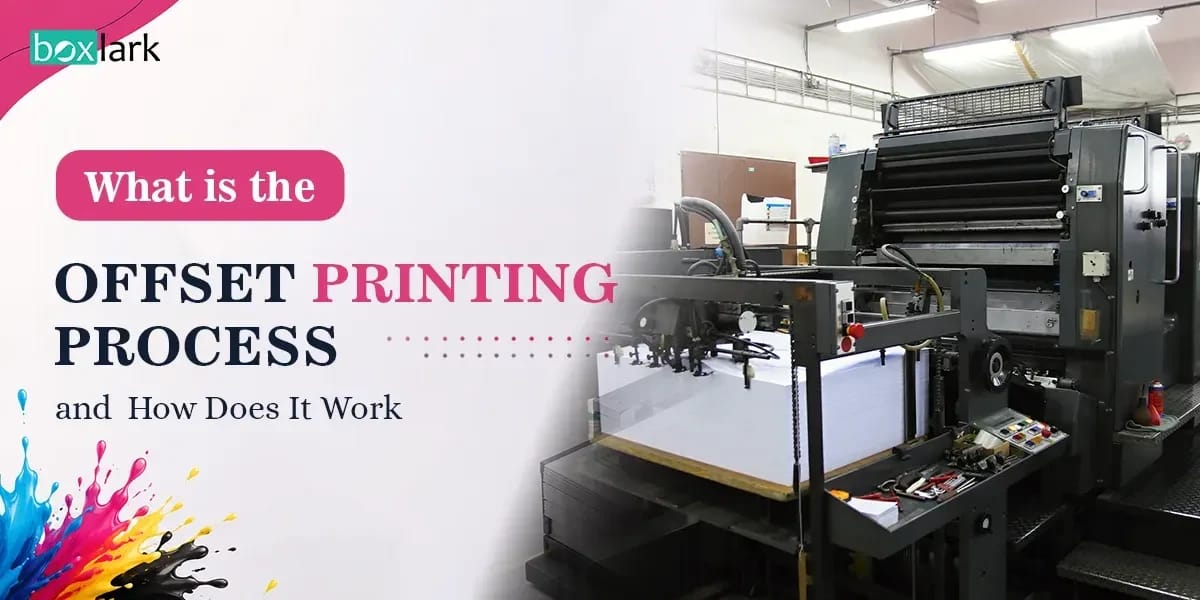
- Offset Printing 101: A Beginner's Guide
- How Does Offset Printing Work: Understanding How Ink Travels from Plate to Package
- Understanding the Benefits and Drawbacks - You Need to Know
- Planning a Packaging Project with Offset Printing? Here Are the Key Factors to Consider
- Offset Printing and Lithographic Printing: How Are They Connected?
- How Can Offset Printing Deliver High-Quality Packaging Solutions at Competitive Prices?
- From Food Boxes to Luxury Packaging: Real Examples of Offset Printing
- Final Thoughts - The Bigger Picture Behind Offset Printing
Each printed package communicates two narratives simultaneously: one regarding the product inside while the other highlights the brand behind it. Obtaining crisp details, uniform colors, and high-quality finishes across numerous packages demands a printing technique designed for accuracy, and that’s where offset printing stands apart. It is a commonly used commercial printing method that transfers ink from a printing plate onto a rubber blanket before applying it to the packaging material.
This printing process supports companies in achieving consistent branding and high-resolution print quality on a large scale, from folding cartons and cosmetic boxes to food packaging and pharmaceutical cartons.
“Every Remarkable Package Starts with a Flawless Print!”
This guide will explain offset printing, its functioning, the essential steps involved, its benefits and drawbacks, and why it continues to be a reliable option for commercial packaging.
Let's unpack the process behind offset printing!
Offset Printing 101: A Beginner's Guide
Offset printing is a commercial printing technique that uses printing plates, ink rollers, and rubber blankets to transfer images onto a surface. In contrast to direct printing techniques, where ink is placed directly onto the surface, this printing process utilizes an indirect approach. The design is initially moved from a printing plate to a rubber blanket and subsequently applied to the final surface, like paperboard used for packaging boxes.
This printing method is commonly used in the packaging sector as it enables brands to obtain intricate graphics, even color application, and uniform outcomes across numerous printed packages.
Why Is It Called Offset Printing?
The term "offset" describes how ink travels throughout the printing procedure. Rather than printing the plate directly on the packaging material, the image is initially "offset" onto a rubber blanket before contacting the final surface. This extra transfer process aids in safeguarding the printing plate, resulting in cleaner and more precise prints.
Why Is Offset Printing a Preferred Choice for Packaging?
This printing process is commonly preferred for packaging projects that require high-quality results at larger volumes. Some key reasons include:
- Uniform colors: CMYK printing enables brands to achieve precise colors on every package throughout a production run.
- Clear details: Text, logos, and intricate designs look sharper and more distinct.
- Cost-effectiveness for large orders: While the initial setup demands planning, the unit cost drops as the order size grows.
- Flexible uses: It is suitable for multiple packaging types, such as folding cartons, cosmetic containers, food packaging, pharmaceutical boxes and retail packaging.
How Does Offset Printing Work: Understanding How Ink Travels from Plate to Package
The offset printing method might seem complicated initially, but it adheres to a well-organized sequence in which each stage is crucial for producing precise and uniform prints. From setting up the design file to applying ink onto the packaging material, every phase contributes to achieving the crisp graphics and dependable color fidelity that offset printing is recognized for.
This printing process is explained below step by step:
Step 1: Preparing the Artwork and Printing File
Before the printing process begins, the packaging design is first generated digitally and converted into a print-ready format. At this stage, designers check whether things like clarity of images, text placement, and color combinations are all right because then they have to appear correctly on the actual packaging.
This printing technique uses the CMYK color scheme, which includes four main colors: Cyan, Magenta, Yellow, and Black. Each color must be separated from the others because every color requires its own printing plate.
Step 2: Creating Printing Plates for Each Color
When the artwork is completed, the design is moved onto printing plates. In CMYK offset printing, an individual plate is made for every color. These plates serve as supports that contain the image regions where ink must be applied.
For instance, a cosmetic box featuring intricate designs will need separate plates for cyan, magenta, yellow, and black. When these colors blend during printing, they form the overall picture visible on the completed packaging.
Step 3: Applying Ink and Maintaining the Ink Balance
Once the plates are ready, they are loaded into the offset printing machine. Ink rollers distribute the appropriate amount of ink to the image portions of the plate, while the non-image regions stay clean due to a water-based dampening system.
Keeping the proper equilibrium between ink and water is crucial as it avoids smudging and enables producing clear, uniform prints.
Step 4: Transferring the Image Through the Rubber Blanket
The step is what distinguishes offset printing from numerous other printing techniques. Rather than directly applying ink from the plate to the packaging material, the image first transfers onto a rubber blanket.
This blanket functions as an intermediary layer that facilitates a smoother transition. It enables the ink to adapt more effectively to various surfaces and reduces the risk of uneven printing, particularly when dealing with paper-based materials.
Step 5: Printing the Design on Packaging Material
After receiving the inked image, the rubber blanket transfers it onto the final packaging surface. The printing press applies controlled pressure to ensure the artwork is transferred accurately and consistently.
This stage turns the prepared artwork into the printed packaging solutions. High-speed offset presses can produce thousands of identical prints while maintaining the same color accuracy and detail.
Step 6: Drying and Finishing the Printed Packaging
After the printing process is finished, the sheets proceed to the finishing phase, where they are readied for their final packaging format. Based on the design specifications, this phase might involve coatings, laminations, embossing, foil stamping, and die cutting techniques.
Die cutting employs specially designed tools to make accurate cuts and folds, enabling flat printed sheets to be folded into packaging.
If you haven't encountered this process before, read our comprehensive guide: “What is Die Cutting? Understanding Its Importance, Functions, and Methods.”
Coatings and laminations safeguard printed surfaces, while embossing and foil stamping provide unique details that improve the overall design.
Now that we have covered the complete offset printing process, from pre-printing preparation to post-printing finishing, let's look at the benefits and drawbacks of this printing technique.
Understanding the Benefits and Drawbacks - You Need to Know
Offset printing is widely used for packaging because of its print quality, consistency, and suitability for large production runs. However, like any printing method, it also comes with a few limitations that should be considered before choosing it.
Benefits | Drawbacks |
Produces sharp images, fine details, and accurate colors | Requires higher initial setup costs due to plate preparation |
Provides consistent results across large quantities of packaging | Not the most suitable option for small print runs |
Becomes more cost-effective as order volume increases | Takes more preparation time compared to digital printing |
Works well with different packaging materials and finishes | Making design changes after plate creation can be more difficult |
Ideal for premium packaging that requires professional print quality | Requires skilled setup and careful color management |
Considering the advantages and drawbacks simplifies the process of determining if it aligns with your packaging needs.
Before selecting this approach, you should take a look at some of the important aspects.
Planning a Packaging Project with Offset Printing? Here Are the Key Factors to Consider
This printing process can be an excellent choice for businesses looking for high-quality packaging at larger volumes. However, factors like order quantity, design requirements, and production timeline should be evaluated before making a decision.
Order Quantity
- It works best for medium to large production runs.
- The initial setup cost becomes more practical when spread across a higher number of packages.
Design Complexity
- Detailed artwork, multiple colors, and fine graphics can benefit from this printing type.
- It is a suitable choice for packaging designs that require precise printing.
Packaging Material
- The printing method should match the type of packaging stock being used.
- Different materials may require different printing approaches.
Production Timeline
- It requires planning for artwork preparation, plate creation, and setup.
- A proper timeline helps ensure smooth production, especially for large orders.
Choosing the right printing method depends on finding the right balance between quality, quantity, and project requirements.
Next, let's look at how offset and lithographic printing techniques are connected in this packaging and printing world.
Offset Printing and Lithographic Printing: How Are They Connected?
Offset printing and lithographic printing are frequently used interchangeably, leading to confusion for those exploring printing choices for packaging. The confusion occurs because offset printing relies on lithographic principles. Understanding this relationship highlights why offset printing is a preferred choice for modern packaging applications.
Lithographic Printing | Offset Printing |
A general printing method based on the principle that oil and water do not mix. | A type of lithographic printing that uses a rubber blanket to transfer the image before printing. |
Transfers images using the interaction between ink and water. | Transfers the image from a plate to a blanket and then onto the final surface. |
Describes the overall printing technique. | A commonly used method for packaging and commercial printing. |
Includes different printing approaches based on the lithographic principle. | Focuses on producing consistent, high-quality prints in larger quantities. |
How Can Offset Printing Deliver High-Quality Packaging Solutions at Competitive Prices?
The price of offset printing is influenced by various factors, such as order size, design specifications, printing supplies, and post-printing options. In contrast to digital printing, offset printing necessitates a preliminary setup process; however, the cost per package may drop when manufacturing higher volumes.
For instance, producing several hundred custom boxes might not be the most cost-effective option since the setup expense is distributed over a smaller number of units. Nonetheless, when a brand requests thousands of boxes featuring the same design, offset printing may turn out to be a more cost-effective choice because of its efficient manufacturing method.
Other factors that can affect the overall cost include:
- Number of colors used: Designs with multiple colors may require additional printing plates.
- Packaging material: Different paper stocks and specialty materials can affect printing costs.
- Finishing options: Features like coatings, foil stamping, or embossing can increase the final price.
Understanding these factors helps brands choose an offset printing approach that matches their packaging requirements and budget.
From Food Boxes to Luxury Packaging: Real Examples of Offset Printing
Offset printing is utilized in various packaging types, assisting brands in producing printed designs that align with their product aesthetics and market requirements. Let’s explore some real-life examples of how this printing method is used in the packaging industry.
Food and Beverage Brands
From cereal boxes and custom bakery boxes to beverage boxes and custom printed sleeves, offset printing helps food and beverage brands display colorful graphics, product details, and brand elements clearly while maintaining print accuracy.
Pharmaceutical Companies
Pharmaceutical brands use medicine boxes and custom supplement packaging with offset printing where clear text, accurate colors, and consistent printing are important. This helps maintain readability.
Beauty and Personal Care Brands
Cosmetic and skincare brands often use this printing method for perfume boxes, makeup boxes, and serum boxes that require detailed artwork, smooth color reproduction, and premium finishes.
Final Thoughts - The Bigger Picture Behind Offset Printing
Effective packaging is not only about the design you create; it is also about how that design appears on the final package. It involves a meticulously created design, which is transferred through exact printing processes, ensuring consistent colors, details, and appearance on each package. Every stage, from initial plate preparation to the completed printed sheet, contributes to transforming an idea into packaging that professionally aligns with a brand.
Moreover, with years of experience in the packaging sector, BoxLark understands that each project requires the right printing technique, material, and finish. Here, you will get help in selecting the right printing approach and materials to create packaging that meets your brand’s goals.