


The Custom Packaging Audit: 10 Signs Your Packaging Needs an Upgrade
Discover how premium packaging transforms your brand's perception and drives customer loyalty in today's competitive market.
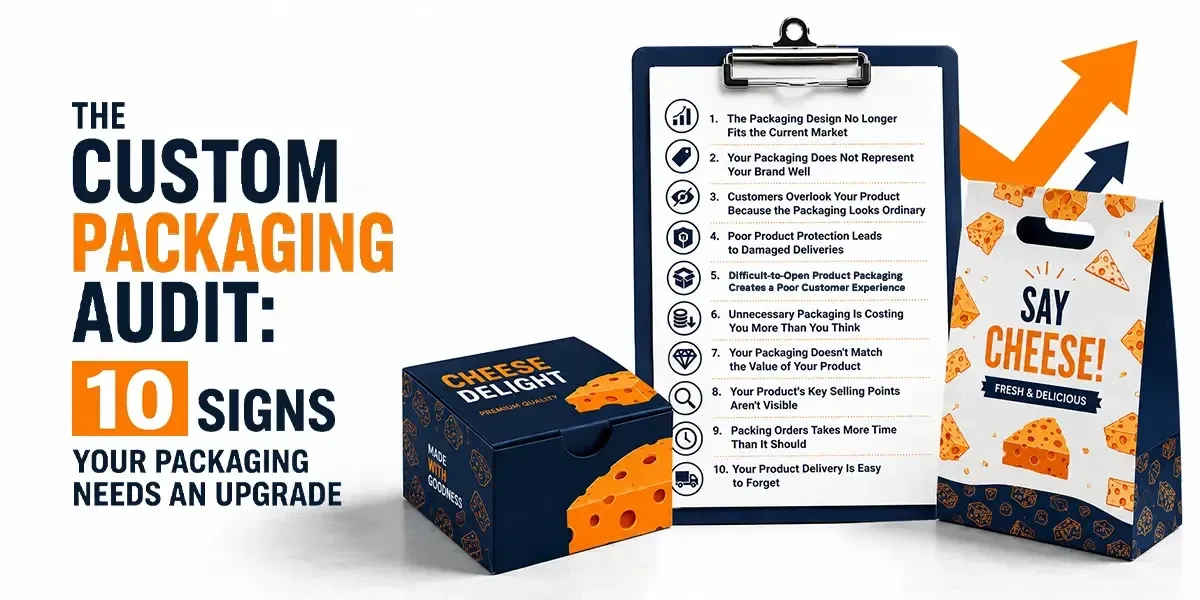
Your packaging can become outdated without you noticing it. What worked for your products a few years ago may no longer align with your current product range, branding, customer expectations, or sales channels. New product sizes, changing customer preferences, and stronger competition can all create reasons to review your existing packaging. Even small issues, such as unclear product information or packaging that takes up unnecessary storage space, can signal that something needs to be audited.
As one quote sums it up perfectly:
"Good Products Earn Repeat Customers. Great Packaging Earns the First Sale!"
A custom packaging audit gives you a chance to look closely at what you are currently using and identify areas that may need improvement. You can assess the box size, material, printing, branding, closures, product protection, and presentation to determine whether each aspect still meets your needs.
This review can also help you identify packaging areas that add unnecessary costs or make packing and shipping more difficult.
In this guide, we will cover 10 clear signs that indicate your packaging may be ready for an upgrade.
Read on to see if your packaging is holding your brand back.
Key Takeaways
- A custom packaging audit helps identify outdated designs, unsuitable materials, branding issues, and unnecessary costs.
- Consistent logos, colors, fonts, and custom messaging help maintain a recognizable brand identity.
- Unique box styles, creative graphics, and suitable finishes help products attract attention immediately.
- Strong materials, proper sizing, and protective inserts can help reduce product damage during shipping.
- Easy-to-open packaging creates a convenient unboxing process for customers.
- Removing unnecessary materials and empty space helps reduce waste, storage needs, and shipping expenses.
- Proper box dimensions can improve storage efficiency.
- Clear selling points make important product information easier to notice.
Importance of Conducting a Custom Packaging Audit - What You Need to Know
A custom packaging audit is a process where there is an evaluation of the current packaging to ensure it fits within the framework of your brand, product, and customer requirements. Instead of redesigning your packaging without a clear purpose, an audit helps identify areas that require improvement and ensures every packaging element contributes to your business goals.
A packaging audit typically evaluates the following:
- Design and Visual Appeal: Does your packaging attract attention and leave a memorable first impression?
- Brand Consistency: Are your logo, colors, typography, and messaging presented consistently across every product?
- Product Protection: Does the packaging keep your products secure during storage, handling, and shipping?
- Material Quality: Are you using durable, useful, and suitable materials for your products?
- Customer Convenience: Is the packaging easy to open, handle, store, or reuse?
- Sustainability: Can your packaging be made more environmentally responsible without compromising quality?
- Shipping Efficiency: Are your box dimensions and structure helping reduce shipping and storage costs?
A packaging audit matters because it goes beyond appearance, helping businesses identify design flaws, branding inconsistencies, and performance issues before they begin affecting customer experience and sales.
Let’s learn in detail!
Custom Packaging Audit: 10 Red Flags Your Packaging Is Due for an Upgrade
Packaging doesn't stop working overnight. Instead, small issues begin to appear over time, making it less effective than it once was. A design that once attracted attention may start losing its appeal over time, materials may no longer suit your product, or your packaging may simply fall short of changing customer expectations.
The following signs will help you evaluate whether your current packaging is still supporting your brand or whether it's time to consider an upgrade.
The Packaging Design No Longer Fits the Current Market
Customer preferences and packaging trends change over time, so a design that once looked modern may now seem outdated. Old colors, graphics, fonts, or layouts can make your products appear less relevant to today’s shoppers.
If your packaging no longer matches your brand, product range, or current market expectations, it may be time for a design upgrade.
Consider These Questions:
- Does your packaging attract attention the moment someone sees it?
- Does it accurately represent your brand as it exists today?
- Would someone picking up your product for the first time find it worth a second look?
- Does your design feel competitive, or has it remained unchanged while the market has moved forward?
If these questions raise concerns, it may be time to refresh your packaging. Custom snack boxes or custom shoe boxes, for instance, can look old when their graphics, colors, or typography no longer match current packaging styles.
Pro Tip: A few design improvements or new print finishes can help bring the packaging in line with the product’s current market.
Your Packaging Does Not Represent Your Brand Well
A logo is the main part of your brand. Your brand colors, fonts, graphics, messaging, and other design choices also help customers recognize your business. When your packaging no longer represents these elements consistently, it becomes harder for customers to recognize your products and distinguish them from competing brands.
This often happens after a company refreshes its branding but continues using outdated packaging or introduces new products with inconsistent designs.
Over time, these inconsistencies weaken brand recognition and create a disconnected customer experience.
Explore Such Signs:
- Your packaging features outdated logos, colors, or design elements that no longer match your current brand identity.
- Different products use inconsistent packaging styles, making your brand difficult to recognize across your product line.
Keeping your packaging aligned with your current brand identity helps create a recognizable presence in the marketplace.
The more familiar customers become with your packaging, the more likely they are to remember your brand and choose it again.
Customers Overlook Your Product Because the Packaging Looks Ordinary
Many companies assume that the customer will notice a good product sooner or later. But how can the customer notice something that he or she doesn't even pick up?
And in the crowded marketplace of retail shelves or cyberspace, packaging becomes an important factor in determining which product will be noticed.
If your packaging does not differ from the other products, then you don't give the customers much motivation to buy your product.
What You Need to Do?
- Opt for unique box styles, such as custom pillow boxes, sleeve boxes, tuck-end boxes, custom vacuum seal Mylar bags, custom child resistant Mylar bags, or custom window boxes, according to your products to differentiate your product from similar offerings.
- Add creative window cutouts to showcase the product whenever needed.
- Incorporate premium finishes, such as foil stamping, embossing, debossing, or spot UV coating, to create a more distinctive appearance.
- Use graphics that are simple and recognizable.
Being different does not mean using more colorful packaging or designing every bit of the package to be highly detailed. It means designing packaging that draws attention and creates a positive impression even before the product is picked up.
Poor Product Protection Leads to Damaged Deliveries
Packaging should protect your product at every stage, from storage and shipping to the moment it reaches the customer. If products are arriving damaged, your packaging may no longer be doing its job.
Packaging Issues | Possible Consequences |
Weak or unsuitable materials | Higher risk of damaged products |
Oversized boxes | Products shift during transit |
Missing inserts or cushioning | Scratches, cracks, and breakage |
Poor structural design | More returns, refunds, and negative reviews |
Upgrading your custom packaging with better materials, proper box sizes, and protective inserts can help reduce product damage during shipping.
Difficult-to-Open Product Packaging Creates a Poor Customer Experience
Picture a customer receiving a product they've been excited to open, only to struggle with difficult seals, excessive wrapping, or a box that tears apart before it even opens. Instead of having a smooth experience, they're left feeling frustrated.
Customers appreciate packaging that is simple to open, comfortable to handle, and can be used again.
Features such as secure closures, user-friendly box styles, and reusable packaging can lead to a satisfying unboxing.
The easier it is for customers to interact with your packaging, the more likely they are to remember the experience for the right reasons.
For example, brands looking to improve the unboxing process can explore options like custom magnetic closure boxes or premium gift packaging styles.
Unnecessary Packaging Is Costing You More Than You Think
Using additional packaging materials beyond what a product requires doesn't always add value. In many cases, it increases material usage, shipping costs, and environmental impact.
Effective packaging uses only the materials needed to protect the product without unnecessary add-ons. Choosing appropriately sized boxes, eliminating unnecessary layers, and selecting recyclable materials can improve efficiency without compromising product safety.
A quick review of your packaging can reveal opportunities to:
- Reduce oversized boxes and empty space
- Replace non-recyclable materials with eco-friendly alternatives
- Minimize unnecessary wrapping and packaging components
Small changes in material use and packaging design can help businesses reduce unnecessary waste while moving toward eco-friendly packaging that meets the growing demand for sustainable solutions.
Your Packaging Doesn't Match the Value of Your Product
The box, printing quality, materials, and finishing details all communicate something about the product inside. If your packaging looks ordinary, customers may assume the product offers an ordinary experience as well.
In contrast, packaging that matches your product’s quality can make the product appear more credible, support brand recognition, and leave a good impression on customers.
Packaging Choices | Customer Interpretation |
Thin or lightweight materials | The product may appear to be low quality |
Plain printing with no finishing touches | The brand pays little attention to presentation |
Generic box styles | The product is similar to countless others |
Poor structural design | The product may not be well protected |
Your packaging doesn't need to be fancy to make a lasting impression. It should match the quality, value, and expectations of your product.
Your Product's Key Selling Points Aren't Visible
If important benefits or features are not properly printed, the packaging may be missing a key communication opportunity.
Check for These Signs:
- The main product benefit is difficult to find at a glance.
- Key features are buried beneath too much text.
- Important details are placed where customers are unlikely to notice them.
- The packaging does not clearly show what separates the product from similar options.
How to Fix: Give priority to the information customers need most. Clear headings, readable typography, product highlights, and suitable visual elements can make key selling points easier to find.
Packing Orders Takes More Time Than It Should
Packaging can create delays long before an order reaches the customer. If employees have to fold complicated structures, add excessive protective material, or spend extra time securing each package, the issue may lie with the packaging itself.
Look for These Signs:
- Boxes or bags take too long to prepare before products can be placed inside.
- Extra tape, fillers, or protective layers are needed for routine orders.
- Different products require separate packing methods because the current boxes lack flexibility.
- Order volumes increase, but the packing process does not become faster or easier.
A Smarter Direction:
Reconsider the packaging structure, closure style, and internal layout based on how orders are actually packed. A simpler setup can reduce extra packing steps, shorten preparation time, and make it easier for your team to handle higher order volumes without adding unnecessary work.
The Final Sign: Your Product Delivery Is Easy to Forget
A product delivery should leave some impression beyond simply getting the order to the customer. If the packaging looks plain, has no clear brand details, or feels the same as any other shipment, customers may have little reason to remember it. This can be a sign that your packaging needs to be revamped.
You can make the delivery more noticeable with simple additions:
- Add a short thank-you note or brand message to give customers something from your business to remember.
- Use a distinctive box style that suits your product instead of relying on a common shape.
- Include a small branded detail, such as a custom sticker or printed pattern.
- Choose finishes that suit your product, such as matte, gloss, embossing, or foil, without overloading the design.
Note: The aim is to create packaging that customers can easily connect with your product and brand.
Conclusion: Why Brands Need to Review Their Product Packaging
A packaging review can reveal problems that are easy to miss during day-to-day business. Outdated designs, unsuitable materials, poor box sizes, shipping issues, or packaging that does not meet customer needs can all show that changes are needed. These changes do not always require a complete redesign. Adjusting the material, structure, printing, or finishing may be enough to improve the box and make it more suitable for your products.
Once you identify what needs to change, choosing the right packaging options becomes easier. BoxLark can help businesses find suitable solutions based on their products, industry, and packaging requirements, with options for different materials, box styles, printing methods, and finishes.
To discuss your requirements or learn more, contact sales@boxlark.com.