


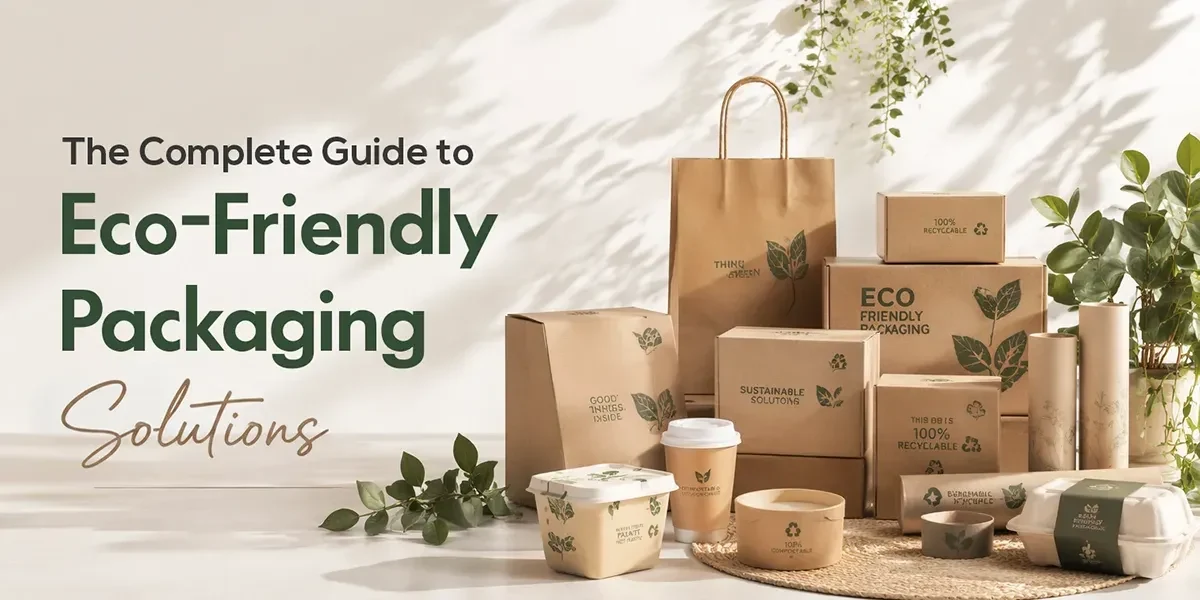
The Complete Guide to Eco-Friendly Packaging Solutions
Discover how premium packaging transforms your brand's perception and drives customer loyalty in today's competitive market.
- What Exactly Is Eco-Friendly Packaging? Why Does It Matter?
- What Materials Make Up Environmentally Friendly Packaging?
- Eco-Friendly vs. Non-Eco-Friendly Packaging: Key Differences Explained
- Is Biodegradable Packaging Better Than Recyclable Packaging?
- How Eco-Friendly Packaging Creates Tangible Benefits for Businesses
- What Role Does Eco-Friendly Packaging Play in Customer Satisfaction?
- Final Thoughts: Why Eco-Friendly Product Packaging Is Worth the Investment
Eco-friendly packaging refers to materials used to wrap and protect products that cause minimal harm to the environment. Instead of relying on single-use plastics derived from fossil fuels, these solutions use recycled, biodegradable, or reusable alternatives to actively reduce waste and lower pollution. The primary goal is to keep packaging out of landfills and prevent toxic microplastics from entering local soil and water systems.
Shifting to nature-friendly packaging requires looking at the entire life cycle of a box, bag, or wrapper. This means carefully considering where the raw materials come from, how much energy it takes to produce them, and exactly how consumers will dispose of them. This guide breaks down what these materials are, how they work, and how they affect business operations.
Read further to learn amazing information!
What Exactly Is Eco-Friendly Packaging? Why Does It Matter?
Eco-friendly packaging is a structural and material approach designed to reduce waste and resource depletion. It encompasses any packaging solution that has a measurably lower environmental footprint than standard alternatives across its entire lifecycle.
This concept relies on three core phases:
- Sourcing: Utilizing raw materials that are renewable, fast-growing, or composed of high percentages of post-consumer recycled (PCR) content.
- Manufacturing: Processing these materials using methods that consume less water, require lower energy inputs, and generate fewer toxic byproducts.
- End-of-Life: Designing the packaging so it can be reused, recycled, or composted through appropriate waste management systems, minimizing long-term environmental impacts.
A package is only considered eco-friendly if it functions correctly within the waste management infrastructure available to the consumer. A biodegradable material that requires an industrial composter to break down, but is sold in a region without such facilities, fails to meet the functional definition of eco-conscious packaging.
What Materials Make Up Environmentally Friendly Packaging?
The physical makeup of sustainable packaging falls into three main groups: recycled conventional materials, plant-based biodegradables, and reusable structural designs.
Recycled Conventional Materials
- Corrugated Cardboard: Made from recycled paper. It is the most common eco-friendly choice because almost every city has a recycling program that accepts it.
- Kraft Paper: A strong, brown paper made from wood pulp. Because it is not bleached with harsh chemicals, it is much safer for the environment and is easy to recycle or compost.
- Recycled PET (rPET): Made from old plastic bottles and containers. It keeps existing plastic out of landfills while still giving the strength and clear look of brand-new plastic.
2: Plant-Based Biodegradables
- Molded Bagasse: Made from the leftover stalks of sugarcane after the juice is extracted. It can be molded into stiff shapes to replace plastic food trays and breaks down within a few months under suitable composting conditions.
- Mycelium Composites: Made by growing mushroom roots around agricultural waste, like hemp husks. It works like custom-cut foam to protect heavy items, but can break down in compost or soil under suitable conditions.
- PLA (Polylactic Acid): A plastic-like material made from fermented plants, usually corn. It is clear and rigid, making it a popular choice for box windows or food containers. However, it only breaks down in high-heat commercial composting facilities.
- Seaweed Extracts: Used to make thin, clear wrappers from seaweed. They can replace single-use plastic wrap for small items, and some dissolve entirely in water without leaving any residue.
3: Reusable Structural Designs
- Reusable E-Commerce Packaging: Durable fabric bags or custom tote bags made to be used over and over again. They help reduce reliance on single-use packaging, especially for business-to-business deliveries and lightweight products such as clothing shipments.
Eco-Friendly vs. Non-Eco-Friendly Packaging: Key Differences Explained
The easiest way to understand the difference is to look at how the two types of packaging act in the real world. The table below compares standard packaging against eco-friendly alternatives.
Elements | Non-Eco-Friendly Packaging | Eco-Friendly Packaging |
Primary Source | Virgin petroleum, natural gas, and raw timber | Recycled post-consumer waste, agricultural byproducts, and fast-growing plants |
Decomposition Time | 450 to 1,000+ years for plastics | Months for compostables; recyclables are processed through recycling systems |
Recyclability | Often multi-material (e.g., paper glued to plastic foil), making recycling difficult | Monomaterial designs (single material type) allow straightforward processing at standard facilities |
Carbon Footprint | High emissions from petroleum refining and virgin material processing | Lower emissions from utilizing existing materials or plant-based carbon sequestration |
Toxicity Level | Can leach harmful chemical additives into soil and water as some materials degrade | Often made without toxic dyes or harmful coatings, biodegradable options decompose into non-toxic biomass |
Microplastic Risk | High: It can break down into persistent microplastic pollution
| Low: Biodegradable materials can break down into natural compounds under suitable conditions |
Is Biodegradable Packaging Better Than Recyclable Packaging?
This is a common question, but neither option is strictly "better." The right choice depends entirely on what product you are shipping and what waste services are available in your area.
Biodegradable Packaging | Recyclable Packaging |
Breaks down into natural elements like water, carbon dioxide, and biomass. using heat and microbes | Gets sorted, broken down, and remanufactured into new raw materials |
Ideal for food items, soiled products, or anything that leaves grease or residue | Ideal for clean, dry items like clothing, electronics, and standard e-commerce orders |
Some types (like PLA) require commercial composting facilities to decompose properly | Relies on widely available curbside recycling bins and municipal plants |
May not break down effectively in regular landfills or unsuitable composting conditions | Gets rejected and sent to a landfill if contaminated with food or grease |
Common materials include PLA, bagasse (sugarcane), and mushroom foam | Common materials include corrugated cardboard, kraft paper, glass, and aluminum |
How Eco-Friendly Packaging Creates Tangible Benefits for Businesses
Switching to eco-friendly packaging solutions for businesses changes how a company operates. The effects are practical and directly impact the bottom line, logistics, and legal compliance.
Lower Shipping Costs
Shipping companies like UPS and FedEx charge based on the size of the box, not just the weight. This is called dimensional weight. Nature-friendly packaging focuses on "right-sizing," which means making the box fit the product exactly with no wasted space. Smaller boxes lead to immediate drops in shipping costs.
Avoiding Government Fines
Governments are introducing stricter packaging regulations and fees on certain waste materials. By switching to recyclable packaging, businesses can meet regulations and reduce the risk of penalties.
Cheaper Waste Removal
Warehouses pay for garbage removal by the ton. When a business receives shipments packed in standard plastic foam or bubble wrap, that trash has to be hauled away. If a business switches to recyclable cardboard or paper inserts, it can reduce waste disposal costs because these materials are easier to recycle and manage.
Stable Material Prices
The price of regular plastic is tied directly to the global oil market. Materials like cardboard, bagasse, and mycelium are influenced by paper and agricultural markets, which can have different price patterns. This can help businesses to predict their future packaging costs.
Changes on the Warehouse Floor
Businesses do have to adjust their packing lines for these new materials. Some plant-based plastics have different sealing and temperature requirements than conventional plastics, while moisture-sensitive materials need proper storage conditions. These changes require an upfront investment to adjust the machinery, but the daily operations run smoothly once calibrated.
What Role Does Eco-Friendly Packaging Play in Customer Satisfaction?
Eco-friendly packaging directly shapes how customers interact with a brand after making a purchase. It reduces the burden of disposal for buyers and reflects a company's environmental values and operational practices. It plays the following roles.
Influences Purchasing Decisions:-
Consumer surveys consistently indicate that many shoppers consider sustainability when making purchasing decisions. When two products are equal in terms of price and quality, sustainable packaging often becomes the deciding factor.
Increases Perceived Product Value:-
Eco-friendly packaging materials, such as thick kraft paper and molded pulp inserts, add substance and texture to packaging. This can make the product feel more premium. In contrast, excessive plastic wrapping and low-quality foam packaging can make even expensive products appear less valuable.
Eliminates Disposal Friction:-
Unboxing a product surrounded by bubble wrap, plastic tape, and foam peanuts often leaves customers with a large amount of waste to discard. Eco-friendly packaging helps reduce this waste, making the disposal process easier and more convenient.
Generates Organic Secondary Exposure:-
Minimalist and naturally designed packaging is often visually appealing. Customers take pictures and share these unboxing experiences on social media, creating organic brand awareness and reinforcing a company's commitment to sustainability.
Strengthens Trust Through Clear Information:-
Customers respond positively to clear and specific instructions printed on packaging, such as "Place this in your curbside recycling bin." Providing accurate disposal guidance helps establish transparency and build trust, while vague claims like "eco-safe" may lead to skepticism.
Final Thoughts: Why Eco-Friendly Product Packaging Is Worth the Investment
Making the shift to eco-friendly packaging can improve how products are packed, stored, and shipped. Instead of relying on single-use plastics, businesses can choose materials that are recyclable, reusable, or biodegradable. Selecting the right packaging solution, such as compostable materials for food products or recyclable cardboard for retail goods, helps create a more efficient supply chain. This can lead to lower shipping costs, better compliance with environmental regulations, and less packaging waste.
However, choosing a trusted packaging supplier is essential to ensure that environmentally friendly materials provide the protection and durability required during transit. BoxLark offers a range of nature-friendly packaging solutions for businesses across different industries. To explore the best nature-friendly packaging options for your products, contact sales@boxlark.com.