


Paper vs. Waterproof Jar Labels: Which Is Best for Your Product?
Discover how premium packaging transforms your brand's perception and drives customer loyalty in today's competitive market.
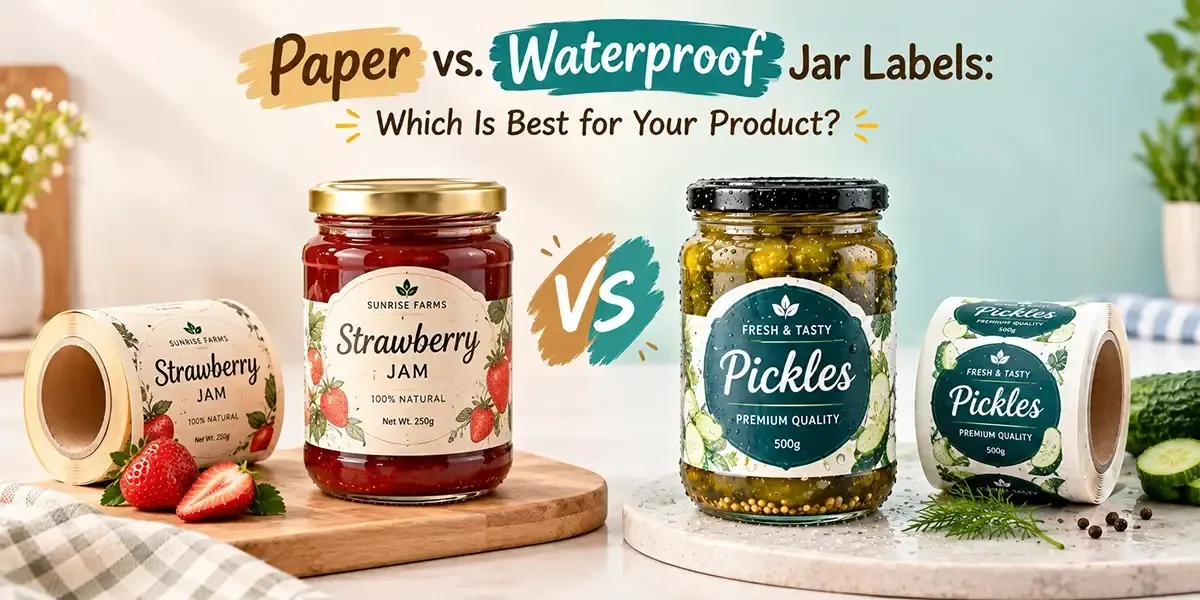
Have you ever taken a jar from the fridge only to see that its label has gotten wet, creased, or begun to peel at the edges? A label might look flawless when applied, but its true test begins when it encounters moisture, condensation, frequent handling, or varying storage conditions. That is where the choice of label material matters. Paper jar labels offer a flexible and economical option for items stored in dry settings, whereas waterproof jar labels offer greater durability for products exposed to moisture and challenging conditions. Understanding these distinctions can help you select a label that fits your product, storage environment, and daily use.
The real question is, do you need a label that works beautifully in dry conditions or one that stays intact when moisture gets involved?
“When Two Labels Look Similar, Their Performance Tells a Different Story!”
It’s time to explore paper and waterproof jar labels in detail, including their common uses, applications, material options, and the challenges and limitations you may face with each.
Key Takeaways!
- Explore the common uses of paper and waterproof jar labels
- See how label materials respond to water, condensation, and humidity
- Compare their appearance, cost, and eco-friendliness
- Understand the role of adhesives, temperature, oils, and chemicals
- Identify the advantages and limitations of each option
- Choose a label based on your product’s storage and handling conditions
To start things off, let’s take a closer look at paper labels!
Paper Jar Labels: You Must Know the Basics
Paper labels for jars are made from paper-based materials and are applied to jars to give a product its identity and key information. They offer a smooth surface for printing, while businesses can choose from different paper textures, finishes, and styles to suit their product. They are a popular choice for products kept in dry conditions, where the label is less likely to come into contact with moisture.
From a product name and ingredients to usage instructions, barcodes, batch numbers, and expiry details, a label brings important information together in one place. This makes it easier for customers to check the product details before deciding whether to purchase it.
Exploring Where Paper Jar Labels Work Across Different Product Categories
Jars are used across many industries, and paper labels are a common choice for identifying and branding their contents. They are commonly used for:
- Dry food jars and pantry products
- Candle and home fragrance jars
- Gift jars and small batch products
- Dry cosmetic or personal care products
Whether used on glass jars or other suitable containers, paper labels offer a suitable option for many types of jar packaging.
Paper Labels: Strengths vs Limitations
Paper jar labels have many benefits, but they also come with a few drawbacks. Looking at both sides of the material gives businesses a clearer idea of where paper labels fit well and where extra consideration may be needed.
Strengths | Limitations |
Lightweight material keeps the label easy to handle during application. | Edges may lift or curl if exposed to unsuitable conditions. |
Paper surfaces work well with detailed artwork and small printed text. | Strong friction during handling may leave visible scuffs or marks. |
Different paper textures give the packaging a distinct tactile character. | Some paper stocks may require additional treatment for better surface protection. |
Uncoated surfaces offer a natural look and allow handwritten details. | Very thin stocks may be less suitable when a sturdier label is required. |
Paper labels are easy to adapt to different shapes and label sizes. | Moisture exposure may cause staining, wrinkling, or weakening of the paper. |
Now that we have a clear understanding of paper labels, let’s take a closer look at waterproof labels.
What Are Waterproof Jar Labels and How Do They Differ?
Condensation, splashes, or regular handling around moisture can leave ordinary paper labels wrinkled, smudged, or loose. This is where waterproof labels for jars step in.
Waterproof materials offer better resistance to moisture while also supporting design options suited to certain applications. For example, white ink works especially well on transparent waterproof labels, helping text, logos, and other design elements remain visible against the jar or product inside. This makes them useful as waterproof jar stickers when a product needs both visual clarity and greater resistance to moisture.
Understanding these differences makes it easier to decide when waterproof labels are worth choosing.
Explore the Common Applications of Waterproof Jar Labels
Waterproof labels are designed for products that face moisture and are commonly used for:
- Pickles, sauces, and preserved foods
- Jams and refrigerated food products
- Beverages and drink containers
- Bathroom and personal care products
- Products stored in chilled conditions
- Jars exposed to condensation during storage or use
These applications show why waterproof labels for food and cosmetic jars are often preferred when moisture is part of everyday storage or use. They are also useful on plastic jars, particularly when the container is regularly handled or exposed to damp conditions.
Understanding the Challenges & Benefits of Waterproof Jar Labels
Exploring both the benefits and challenges gives businesses a clearer picture of when they are truly worth choosing.
Benefits | Challenges |
Handles water, condensation, and humid conditions more reliably. | Usually costs more than standard paper labels. |
Keeps printed details readable during moisture exposure. | Some synthetic materials may provide a different look and feel from paper. |
Offers better durability for frequent handling. | Adhesive performance may vary depending on the jar surface. |
Resists scuffing and everyday wear during handling and transportation. | Oils, chemicals, and temperature changes may affect performance. |
Helps the label stay attached during everyday use. | Extra moisture resistance may not be necessary for every product. |
Now that we have discussed paper and waterproof jar labels in detail, it’s time to compare their key differences and see how each performs in different conditions.
Paper vs Waterproof Jar Labels: Explore the Key Differences
Paper and waterproof jar labels may serve the same basic purpose, but their performance changes significantly depending on the environment they are used in. These differences are important when comparing paper vs waterproof labels for product packaging and deciding which option suits your packaging needs.
Moisture & Water Resistance
Moisture exposure is often the first factor to consider when choosing a label material.
- Paper Labels - Paper absorbs moisture, which may cause wrinkling, staining, peeling, or loss of adhesion. It works best in dry conditions with little exposure to water or condensation.
- Waterproof Labels - Waterproof materials resist water instead of absorbing it, making them more suitable for damp environments, refrigeration, and products handled around moisture.
Verdict: Waterproof labels are better for moisture exposure.
Durability
The right label should hold up well throughout handling, storage, and transportation.
- Paper Labels - Paper labels are suitable for everyday products kept in stable conditions. However, rough handling, moisture, or repeated rubbing may cause scuffing, tearing, or surface damage.
- Waterproof Labels - Waterproof labels offer greater resistance to scuffing and everyday handling, helping them maintain their appearance and adhesion for longer in demanding conditions.
Verdict: Waterproof labels offer better durability.
Aesthetic Appearance
The label material plays an important role in the overall look and feel of the jar.
- Paper Labels - Paper gives jars a natural, tactile appearance and comes in smooth and textured options. It works well for brands that want to have a handmade or traditional appearance.
- Waterproof Labels - Waterproof materials offer a cleaner, more modern appearance with options such as matte, gloss, and transparent finishes. Clear materials can make the label less visible, giving the container a simple, no-label look.
Verdict: Paper suits a natural look; waterproof suits a modern look.
Cost
Label material can have a noticeable effect on the overall packaging budget.
- Paper Labels - Paper is generally more affordable, making it a practical option for products that stay dry and do not require additional moisture resistance.
- Waterproof Labels - Waterproof materials usually cost more because of their manufacturing and performance. However, their durability may make the added cost worthwhile for demanding applications.
Verdict: Paper labels are better for lower upfront cost.
Sustainability
The choice between paper and synthetic labels also affects how the packaging fits into different environmental priorities.
- Paper Labels - Paper options include kraft, coated, uncoated, and textured stocks. Some may contain recycled fibres or use responsibly sourced materials, supporting the use of renewable and more environmentally friendly packaging materials.
- Waterproof Labels - Common synthetic materials include BOPP and polyester. They provide durability and moisture resistance but do not naturally biodegrade like paper.
Verdict: Paper is generally better for renewable and biodegradable options.
Temperature Resistance
Storage conditions can affect how well a label stays attached and maintains its appearance.
- Paper Labels - Paper performs best under stable, moderate conditions. Refrigeration, condensation, and temperature changes may affect its surface and adhesion, particularly in chilled environments.
- Waterproof Labels - Waterproof materials are better suited to refrigerated products and changing temperatures. Their moisture resistance helps the label maintain its structure and appearance in colder or damp conditions.
Verdict: Waterproof labels are better for changing temperatures.
Adhesive Performance
The adhesive plays an important role in keeping the label securely attached to the jar.
- Paper Labels - Paper labels generally work well on smooth, dry surfaces under stable conditions. Moisture, temperature changes, or curved surfaces may affect adhesion and cause edges to lift.
- Waterproof Labels - Waterproof labels can use adhesives designed for moisture, refrigeration, and demanding surfaces. The right adhesive still depends on the jar material, shape, and storage conditions.
Verdict: Waterproof labels are better for challenging conditions.
Printing & Customization
The label material influences how printing and design details appear on the jar.
- Paper Labels - Paper supports various printing methods, stocks, textures, and finishes, giving brands flexibility in creating different visual styles.
- Waterproof Labels - Synthetic materials support options such as transparent labels, white ink, and various finishes.
Verdict: Both offer flexible customization options.
Oil & Chemical Resistance
Some products can expose labels to oils, chemicals, or other substances, making material resistance another important consideration.
- Paper Labels - Paper may absorb oils and certain substances, which can lead to staining, surface damage, or reduced appearance. It is better suited to products with limited exposure.
- Waterproof Labels - Many synthetic materials offer better resistance to oils, grease, and certain chemicals, although performance varies by material and application.
Verdict: Waterproof labels are better for oily or chemical exposure.
Not Sure Which Label to Choose? Start With This Decision Matrix
Paper and waterproof labels each have their place. The better choice depends on the conditions your product faces and the level of durability your custom packaging requires. The best jar labels for different products ultimately depend on where the jar is stored, how it is handled, and what it contains.
Choose Paper Labels If:
- Your product stays in a dry environment
- Keeping material costs lower is important
- You prefer a natural paper look
- Your product has a shorter or predictable use cycle
Choose Waterproof Labels If:
- Your product faces water, condensation, or humidity
- It needs to be refrigerated or exposed to temperature changes
- The label will be handled frequently
- You need stronger resistance to moisture and scuffing
- Keeping the label intact throughout product use is a priority
Concluding Remarks!
A jar label might seem like a small detail until it meets a wet countertop, a cold refrigerator, or a few too many trips through customers’ hands. Paper works well when conditions stay dry and simple, while waterproof labels work better when moisture, condensation, temperature changes, or frequent handling enter the picture. Once you consider the product and its surroundings, the choice becomes much easier.
“Dry Shelf or Damp Fridge? Let Your Product Decide Which Label Works the Best.”
BoxLark specializes in manufacturing custom jar labels USA businesses can use across different product categories. Choose your material, size, design, coating, finish, and lamination to create labels suited to your product packaging needs.
For more information, email sales@boxlark.com and outline your requirements!