


AQ Coating vs UV Coating: Key Differences, Benefits, and Best Uses
Discover how premium packaging transforms your brand's perception and drives customer loyalty in today's competitive market.
- Key Takeaways!
- AQ Coating: Every Detail You Need to Know
- What Is UV Coating in Packaging: Meaning and How It Works?
- AQ Coating vs UV Coating: What Are the Key Differences?
- AQ Coating vs UV Coating: Understanding the Value Each Finish Brings to Printed Packaging
- Common Uses of AQ and UV Coatings in Packaging
- Things to Consider Before Choosing AQ or UV Coating
- Final Thoughts: Two Finishes, Two Visual Outcomes, One Perfect Packaging Choice
Have you ever wondered what actually makes a package look instantly premium? Is it the box design or bag style itself, its printing, or the coating on top of it? People generally tend to believe that it is the printing, but the real magic starts after the printing process. This thin but essential element, the coating, can transform packaging completely in terms of its texture, glossiness, and the overall perception of the product by consumers. The two most popular choices among coatings are AQ coating and UV coating, both of which serve as protective agents for the printed surface.
However, they have different approaches. The choice between them is not only technical, but also reflects the value of your brand image every time.
The truth of the matter is that the only thing left to ask is: do you want a protective shield that is not very visible or one that is all flashy and eye-catching?
“Two Coatings, One Box, But Customers See Two Different Stories.”
It is time to learn more about the differences between these two coatings, when to use them, and how to choose the right one for your packaging.
Key Takeaways!
- Compare how AQ and UV coatings differ in appearance and durability
- Get familiar with the different finish options available for each coating
- See how coating type affects the look and feel of printed packaging
- Understand the role of coating in protecting printed designs
- Learn how coating choices affect packaging performance and presentation
AQ Coating: Every Detail You Need to Know
AQ coating, abbreviated as aqueous coating, refers to a clear water-based layer added to the product packaging to protect the surface from wear after printing. It works like a light protective film that covers the printed surface, keeping the design protected during handling, transportation, and display.
However, what it does is that it can improve resistance to scuffing, rubbing, fingerprints, and other everyday handling effects, depending on the formulation.
Types of AQ Coatings
AQ coatings come in distinctive types that can be applied to printed packaging materials to provide the desired aesthetic and protective qualities.
- Gloss AQ Coating
Gives a light shine that makes colors look brighter and fresher while keeping a natural look. Commonly used for clean, everyday packaging.
- Matte AQ Coating
Provides a smooth, non-reflective surface that reduces glare and gives a soft, modern look. Used for simple and elegant packaging styles.
- Satin AQ Coating
Balances gloss and matte with a light, soft sheen. It offers a balanced, refined finish without being too shiny or flat.
- Soft Touch AQ Coating
Creates a smooth, velvety feel on the surface. Creates a more noticeable surface feel and premium experience rather than shine.
Unlike heavy laminations, AQ coating is also more compatible with printing. It works well in high-speed production, supports large order runs, and is generally compatible with paperboard recycling, depending on the formulation and recycling process. This makes it a practical choice for everyday packaging.
What Makes AQ Coating a Preferred Packaging Finish: The Advantages Brands Value
Sometimes, packaging generally does not require such a highly luxurious look. What it requires is consistency, protection, and cost control. AQ coating meets this requirement by improving resistance while keeping production fast and simple.
The printing ink on the packaging becomes resistant to wear and tear, smudging, and scuffs that might occur in the process of packing and shipping. However, it does not make the packaging heavy.
Where AQ Coating Makes a Difference: A Real Packaging Scenario
Think of a company producing thousands of custom biscuit boxes every week. The goal is not to create a flashy finish. The goal is to protect the print and maintain consistent packaging performance.
In this regard, AQ coating works ideally because it protects the print during stacking and delivery, keeps the packaging looking neat on shelves, and keeps bulk orders from becoming significantly more expensive.
Now that we have a clear understanding of what aqueous coating is and how it works in packaging, let’s move on to UV coating and see how it is different in terms of finish, performance, and overall impact.
What Is UV Coating in Packaging: Meaning and How It Works?
UV coating is basically a clear coating that is used on printed packages and is then cured almost instantaneously by ultraviolet light. Once it is exposed to ultraviolet light, the coating solidifies rapidly to form a tough and shiny coating over the printed design. Thus, UV coating stands out from other coatings in terms of its method of curing. Unlike AQ coating, which requires air-drying, it is cured almost immediately by ultraviolet light.
It is applied whenever there is a need to make the packaging look impressive. UV coating makes the color deeper, adds glossiness, and gives printed packaging a more premium and attention-grabbing appearance.
Types of UV Coating
There are types of UV coating used in packaging, and each one creates a different visual effect:
- Gloss UV Coating
This is the most commonly used UV coating form. It results in a very reflective surface that helps the colors appear very vibrant. It is widely used in the packaging of products that require visibility in the retail environment.
- Matte UV Coating
As opposed to gloss UV coating, matte UV coating is used for a reduced shine and a smooth surface finish. It is used when companies need their products to have an elegant rather than glossy finish.
- Spot UV Coating
Spot UV coating is applied only on specific areas of the packaging, like logos or design elements. It creates contrast between glossy and non-glossy areas, making certain parts stand out.
- Raised UV Coating
This type adds a slightly raised or textured effect on the surface. It is used for creative packaging designs where touch and feel matter as much as appearance.
Why UV Coating Works So Well for Packaging: The Benefits Behind Its Popularity
UV coating is not just a protection technique; rather, it is a matter of presentation. It is opted for by brands whenever they intend to make their packaging products look distinct from the moment they catch the eye. It creates a highly glossy surface, which allows pictures and colors to look vivid. Along with creating a good presentation impact, it provides protection against scratches and fingerprints.
Because of the visual effects, UV coating is extensively employed in industries where packaging plays an important role in luring consumers.
Behind the Packaging: A Real Example of UV Coating
Consider an example of a perfume box placed inside a shop. It is placed among dozens of other products, all competing for one’s attention. The box with UV coating catches light better and looks shinier in comparison to a dull surface. For this reason, high-end cosmetic items, small-sized electronics, and even promotional boxes make use of the UV coating process.
AQ Coating vs UV Coating: What Are the Key Differences?
Although both types of coatings serve to protect printed packaging, there are differences in their manufacturing, application, and performance. Let us learn about what makes them different from one another.
Composition of Coating
A coating's composition determines how it performs, how it dries, and where it works best.
AQ Coating: It is water-based and forms a protective layer as the water evaporates. Its simple formulation makes it a practical choice for everyday packaging and brands that value sustainability.
UV Coating: The coating uses liquid chemicals that dry instantly when exposed to ultraviolet rays. The result is a hard and durable coating with an elegant finish.
Drying and Curing Process
The way a coating sets on the packaging affects both production speed and the final finish.
AQ Coating: It dries primarily through water evaporation and absorption, often assisted by heated air. The process is quick and works well for large production runs.
UV Coating: This coating hardens instantly when exposed to ultraviolet light. The immediate curing helps speed up production while creating a tough protective layer.
Finish and Appearance
The finish is often the first thing customers notice, making it an important part of the packaging experience.
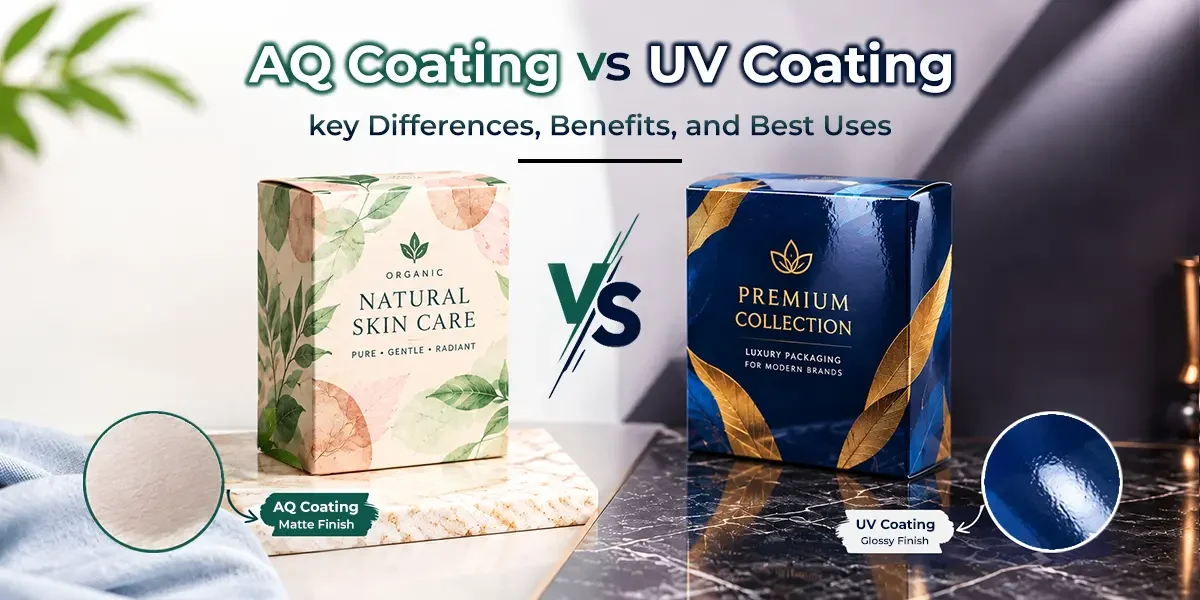
AQ Coating: It offers a natural finish that is available in gloss, matte, satin, and soft touch options. It enhances the printed design without creating excessive shine.
UV Coating: It produces a brighter, glossier appearance that makes colors look richer and graphics more eye-catching. It is often chosen for packaging that needs strong shelf appeal.
Durability
Durability determines how well the packaging survives handling, transport, and shelf life.
AQ Coating: It provides reliable protection against fingerprints, dust, and light scratches, making it suitable for everyday handling.
UV Coating: It creates a solidified surface that offers better resistance to scratches, scuffs, and frequent handling during shipping and retail display.
Environmental Impact
Sustainability is becoming an important factor in packaging decisions today.
AQ Coating: Being water-based, AQ coating is generally considered the more environmentally friendly option and is widely used by brands focused on sustainable packaging.
UV Coating: Although UV coating produces very low VOC emissions while drying, it is typically less eco-friendly than AQ coating because of its chemical formulation.
Cost
Cost plays a big role when choosing between large-scale production and premium presentation.
AQ Coating: It is more budget-friendly, making it a popular choice for high-volume packaging projects.
UV Coating: It usually costs more due to its specialized curing process and premium visual finish.
Best Applications
Each coating performs better in specific packaging situations depending on product type and branding needs.
AQ Coating: It is commonly used in food packaging, folding cartons, pharmaceutical packs, retail packaging, and other items manufactured in large volumes.
UV Coating: It is commonly used on luxury packaging, cosmetics, perfumes, electronics, gift boxes, and other items that rely heavily on their appearance.
AQ Coating vs UV Coating: Understanding the Value Each Finish Brings to Printed Packaging
Beyond how they work, here’s what each coating actually delivers for your packaging in real use.
Advantages of AQ Coating
- Keeps packaging safe during everyday handling without affecting print quality
- Helps packaging look neat and presentable from production to delivery
- Makes packaging easier to stack, pack, and transport without surface damage issues
- Supports smooth, high-speed production, which helps meet tight deadlines
- Works well for large-scale packaging runs without increasing complexity
- Maintains a clean, consistent finish across thousands of units
- Fits well with packaging systems that focus on everyday use and efficiency
Benefits of UV Coating
- Gives packaging a strong visual presence that grabs attention quickly
- Helps products stand out in crowded retail environments
- Adds a refined, high-impact look that supports brand positioning
- Improves the overall perceived value of the product inside the package
- Enhances customer first impression at the point of purchase
- Keeps printed surfaces looking sharp under lighting and display conditions
- Supports premium brand storytelling through visual appeal
Now that we have explored the benefits of AQ and UV coatings, let’s look at where these finishes are, how they are commonly used in packaging, and how they add value in different industries.
Common Uses of AQ and UV Coatings in Packaging
In real packaging production, coatings are not chosen randomly. They depend on how the product is handled, displayed, and sold. Let’s take a look at the uses of each of the following techniques in the packaging industry.
Packaging Type | Recommended Coating | Why It Works |
Food Boxes and Folding Cartons | AQ Coating | Useful, cost-effective, and suitable for high-volume production |
Pharmaceutical Packaging | AQ Coating | Provides a clean finish and supports clear printed information |
Retail Product Boxes | AQ or UV Coating | Depends on whether the brand wants functionality or a stronger shelf appeal |
Cosmetic Packaging | UV Coating | Creates a premium look with enhanced colors and shine |
Perfume and Luxury Gift Boxes | UV Coating | Adds a high-end feel and improves visual impact |
Electronics Packaging | UV Coating | Offers durability and a polished appearance |
Subscription and E-commerce Boxes | AQ Coating | Keeps packaging neat while managing production costs |
Every package has a different job, and the coating helps it do that job better. AQ keeps things functional and reliable, while UV adds that extra visual spark when packaging needs to stand out.
Things to Consider Before Choosing AQ or UV Coating
While both coatings offer valuable benefits, each one comes with a few limitations. Understanding these factors helps you choose a finish that matches your packaging needs, design goals, and product requirements.
AQ Coating:
- Does not create the same bold shine as UV coating
- May not be the best choice for luxury packaging that needs a high-impact finish
UV Coating:
- Usually costs more than AQ coating
- May not be suitable where writing on the surface is required
- Can be less flexible for folded packaging areas
No coating is perfect for every packaging project. The best choice depends on finding the right balance between appearance, functionality, budget, and the experience you want your packaging to create.
Final Thoughts: Two Finishes, Two Visual Outcomes, One Perfect Packaging Choice
Packaging may look simple from the outside, but the finish on it can change the whole experience. AQ coating and UV coating each bring something different to the table. AQ coating keeps packaging smooth and reliable, while UV coating adds an extra pop with shine and premium appeal. From everyday cartons to luxury product boxes, the right coating helps your packaging match your brand’s personality.
“There is No One 'Perfect' Coating for Every Packaging. The Right Choice Depends on What You Want Your Packaging to Achieve!”
BoxLark assists brands in determining the most suitable custom packaging finishes using a professional and highly detailed process. Whether it is choosing the most appropriate coating or developing packaging designs to complement the branding of your products, the aim is always to meet key objectives. This is because effective packaging does much more than offer protection for your products.