


10 Different Types of Packaging Materials You Should Know
Discover how premium packaging transforms your brand's perception and drives customer loyalty in today's competitive market.
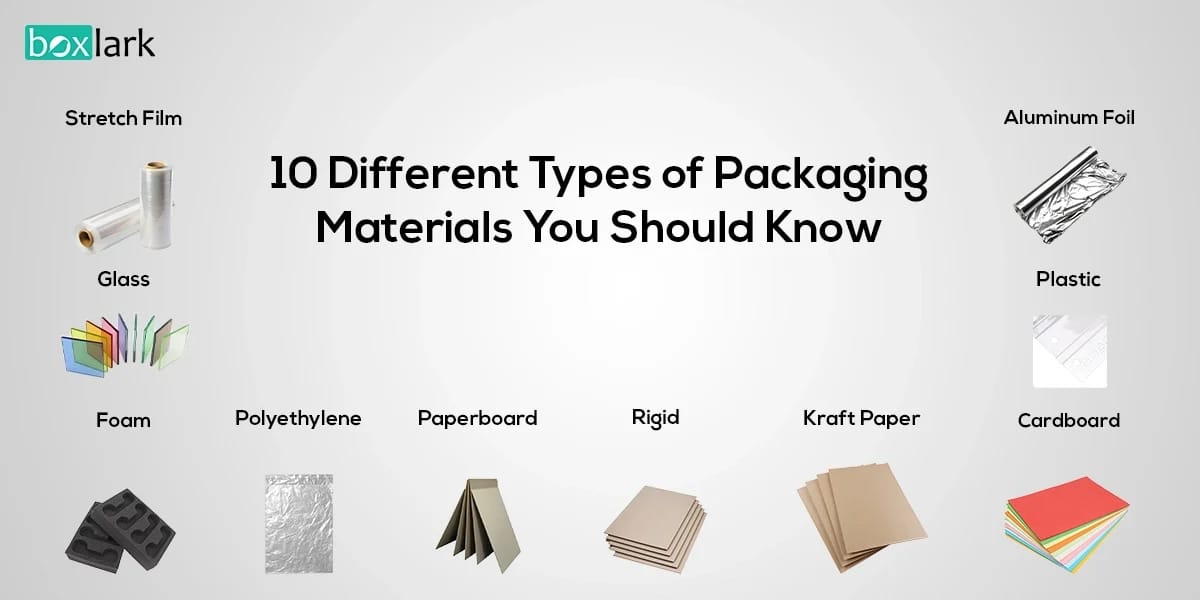
Have you ever heard about the term Packaging Materials? Are you interested in knowing the types of packaging materials? Along with this, some other interesting questions arise, like: How do I choose the right packaging material for my product? Which packaging material is best for shipping products? Let me tell you one more important thing: the packaging trends keep changing with the passage of time. So, if you are unaware of that, keep in mind that randomly selected material can ruin your brand reputation in the long run. So, be wise about every small detail! Because not all the packaging stocks are treated equally, all have different benefits and drawbacks.
Smartly Selected Packaging Material = The Foundation of Brand Success
A wise selection regarding packaging stocks leads to great results in the form of the best product safety, reduces logistics expenses, impressive shelf appeal, and much more.
Curious to know more?
Stay with me till the end of the blog for insightful information!
The 10 Packaging Materials Every Brand Must Know
There are different types of packaging stocks that consumers love to know and use, such as cardboard, glass, metal, plastic, corrugated, rigid, and others. All these types do not work well for every product; they vary from item to item. Simply, it purely depends upon what products you are offering in the market, including your personal choices.
If you are wondering which materials suit your multiple types of products, don’t look further. Here, I have compiled an ideal list that will help you cut through the noise, and you will get to know about the 10 packaging materials, assisting in choosing smarter for your custom cosmetic packaging, food boxes, gift packaging, bakery boxes, and much more.
Let’s have a look!
1. Kraft Paper
Kraft paper is included among the top-rated eco-friendly packaging materials that are affordable. This biodegradable and recyclable stock reduces the environmental impact and comes with different thickness levels. It is good to resist moisture and handle rough shipping.
An ideal fact about this brown color stock is that it is commonly used for various custom packaging needs in different industries. This is best suited for the manufacturing process of food boxes, custom gift packaging, jewelry packaging, pharmaceutical boxes, and some types of custom bags, such as cosmetic paper pouches, custom gift bags, food pouches, custom Kraft bags, etc. If you have food, jewelry, medicine, and other products like this, you should prefer to use custom kraft packaging.
2. Rigid
Rigid is used to prepare durable custom rigid boxes with logo that offer a premium look on every shelf. Many features of this carton make it the first choice of every business. This durable stock is perfect for long-distance shipping because of its durable nature and high strength. This is easily customizable and can be given any shape according to the merchandise.
If you are running a brand that consists of premium and luxury products, you should start with this type of durable packaging for long-lasting results. If you want to display your items on all the shelves impressively, this is also the perfect box for this; you can 100% rely on rigid cartons.
One important thing is that it is expensive than other eco-friendly materials like kraft, cardboard, corrugated, and paperboard, but it generates long-lasting results.
3. Paperboard
Paperboard is a thicker stock than regular paper, and it is a less-thick material compared to cardboard. Apart from that, it is widely used in different industries to pack various lightweight items such as cereal, toys, frozen food, DVDs, stationery, etc. This material can be converted into any shape and size based on the product’s nature and printed with unique printing methods to give an adorable look, which will generate good sales.
This stock is easily affordable, but it does not offer the highest protection. For this, you need to be extra vigilant when packing items in paperboard boxes to avoid any damage.
Interested to know more? So, keep reading!
4. Cardboard
Cardboard is made by layering sheets of paperboard together to form a sheet. Without any delay, now, I am about to share its most impressive feature. Want to know? It is both biodegradable and recyclable.
Its features are not ending here; there are many more interesting facts to explore. Its color varies from grey to light brown. In addition, it can be personalized with dyes, luxury printings, coatings, and laminations.
Here is a surprising fact about durable cardboard stock you might not know!
It is a widely used packaging material that serves a wide range of purposes. It is known because of its lightweight and sturdy nature, which makes it a good choice for shipping multiple items.
Most of the industries prefer to use it as it cuts down waste. Further, it also supports sustainability. This eco-friendly and durable stock can be converted into any shape to make custom cardboard boxes.
5. Foam
Foam is prepared from polystyrene beads. Let me tell you more. It expands into a sponge-like material when heated. There are various types of foam, including EVA, PU, PE, PVC, TPE, and IXPE Foam. All these have different applications as EVA is used for packing sports tools and children’s toys for the safety of these items. This soft stock is best used to protect fragile items.
Moreover, it is used in different types of business due to its special properties. One of the greatest advantages of using foam in packaging is that it can be reused.
6. Glass
Most of the industries have been using glass for many years, you can say for centuries. It is considered the best stock that preserves the quality of the goods. Glass is 100% recyclable and can be reused without losing quality.
This luxury stock gives all the products a premium look that improves the brand image. This is used to pack items, such as food, cosmetics, beverages, or other products. The carton made from that comes in different cute colors and thicknesses. So, prepare it as you want to see!
7. Stretch Film
Another interesting choice is the use of stretch film or stretch wrap in the packaging. This is thin and made from linear low-density polyethylene (LLDPE). This stretch film is used to wrap various types of cartons or other regular or irregularly shaped items to protect against dust and moisture. They are available in various sizes and colors and are used according to the items.
This material has a drawback as it can’t be recycled, which creates a negative impact on the environment. Apart from that, it is a cost-effective choice that efficiently reduces the need for extra packaging materials.
8. Polyethylene or Polythene
Polyethylene, also called polythene, is a commonly produced plastic that is widely used due to its flexibility and durability. The outstanding feature of this packaging stock is that it provides the ultimate protection for the items from rain. It is also moisture-resistant. Its lightweight nature reduces the shipping costs.
Polythene consists of different types, all of which have different strengths and uses. Some of its types are:
● Ultra-high-molecular-weight polyethylene (UHMWPE)
● High-density polyethylene (HDPE)
● Linear low-density polyethylene (LLDPE)
● Low-density polyethylene (LDPE)
● Chlorinated polyethylene (CPE)
Basically, these stocks are used to make durable plastic bags with a logo, printed food packaging, catchy shopping bags, protective wraps, and other pouches.
9. Aluminum Foil
Aluminum foil is another excellent material that is available in rolls, providing large, flexible sheets of metal that are easy to use for wrapping or packaging. It is not as long-lasting as plastic and glass cartons.
Aluminum offers excellent corrosion resistance. This is used to hold various products, such as food, beverages, candy, soaps, and more. It can be given any shape to meet distinct needs.
10. Plastic
Another packaging option is plastic. You can use it to make both bags and custom boxes. These are a few types of plastic materials: PET, PP, HDPE, LDPE, PVC, PS, PLA, rPET, and others. Choose these based on your item’s needs and by considering the environmental impact. These are used for food and beverage packaging, grocery bags, Mylar bags, coffee bags, promotional pouches, and custom grocery bags. Some are more durable and waterproof, making them a perfect choice for packing retail items.
One of the greatest benefits of using this packaging material is that it is perfect for resisting humidity because of its airtight top. It is also perfect for other harsh weather conditions. On the other hand, we can’t ignore its drawback, that not all plastic materials are an environmentally friendly choice. As a brand owner, you should prefer to use packaging that impressively shows your brand’s aim or values.
Key Takeaways!
To cut it short, hope you now have clarity about the 10 different types of packaging materials. With this unique and valuable information, you can easily select any packaging stock that is suitable for your products. What should you do? First, look at your business needs, then choose the right stock based on those needs. Below is an interesting surprise for you!
BoxLark is the ideal platform to order eco-friendly packaging with endless customization choices. The best part is that here you will get free design support, free shipping in the USA, UK, Canada, and Australia. If you are ready and looking for an instant free quote and other impressive benefits, reach out using the information given below:
Email address: sales@boxlark.com
Phone number: (800) 811-5541.